
Mentions
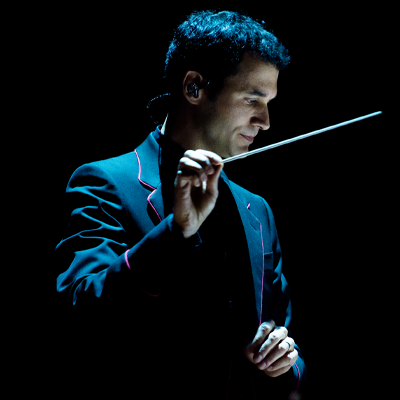 Ramin Djawadi
Composer
Game of Thrones | Westworld | Iron Man
“The highly capable LUX Orchestral Brass has a powerful and inviting timbre made accessible through its clever programming.”
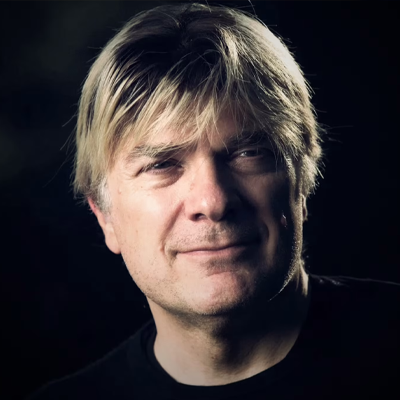 Simon Franglen
Composer
Avatar: Fire & Ash | Titanic | The Magnificent Seven
“I’m really impressed. With LUX Orchestral Brass, Sonuscore have succeeded in creating a library that genuinely pushes the envelope for playability and sound. Seriously good.”
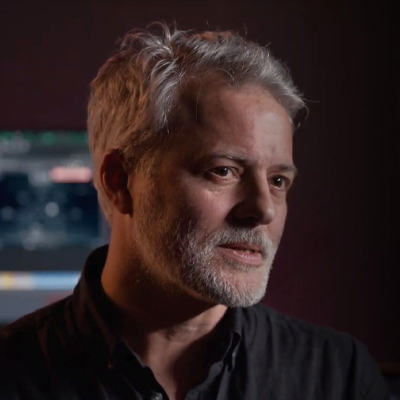 Stephen Gallagher
Composer
LOTR - The War Of The Rohirrim | The Beatles: Get Back | District 9
“LUX Orchestral Brass is my dream-come-true workhorse cinematic brass sample library. A virtual golden consort construction from the good people of Sonuscore. It shines in its smoothness and subtlety from softness right through to furnace-fiery fortissimo. The tones are beautiful, and its articulations are deep. The auto divisi function is absolute genius.”
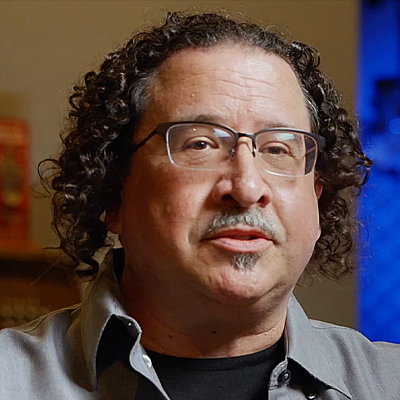 John Enroth
Composer
Thor: Ragnarok | 21 Jump Street
“The Dynamics captured in LUX Orchestral Brass are incredible. Being able to go from that warm hum that is soft brass to biting brass growl with just the mod wheel speeds up the writing process in a way I didn’t know I needed.”
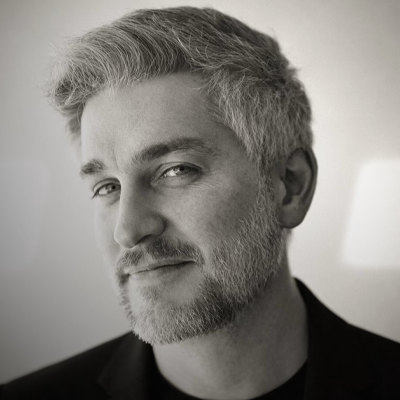 Judson Crane
Composer
Knives Out | Looper | Insurgent
“I love how LUX Orchestral Brass responds to dynamic control; its smooth movement from gorgeous warmth to a bit of brassy bite is realistic and extremely satisfying in a way I don’t experience with other libraries. The auto divisi tools are a big time saver, and playability is top tier. I would 100% use these instruments in a final production.”
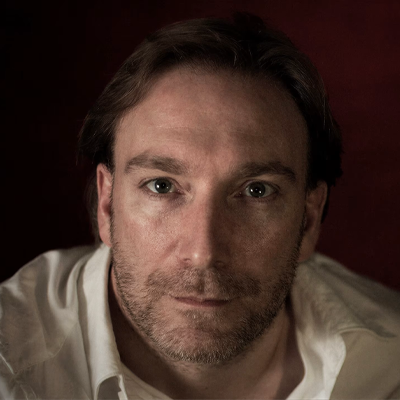 Paul Rabiger
Composer
National Geographic | Terra X | Amazon
“Lyrical legatos. Huge dynamic range. A sound that feels played, not programmed. Section divisi automatically picks the right number of players for each chord, keeping the legato polyphonic, and the ensemble divisi distributes chords across the whole brass family. From majestic tutti to the most delicate solo line, LUX Orchestral Brass delivers”


Orchestral Brass with True Depth and Dynamics
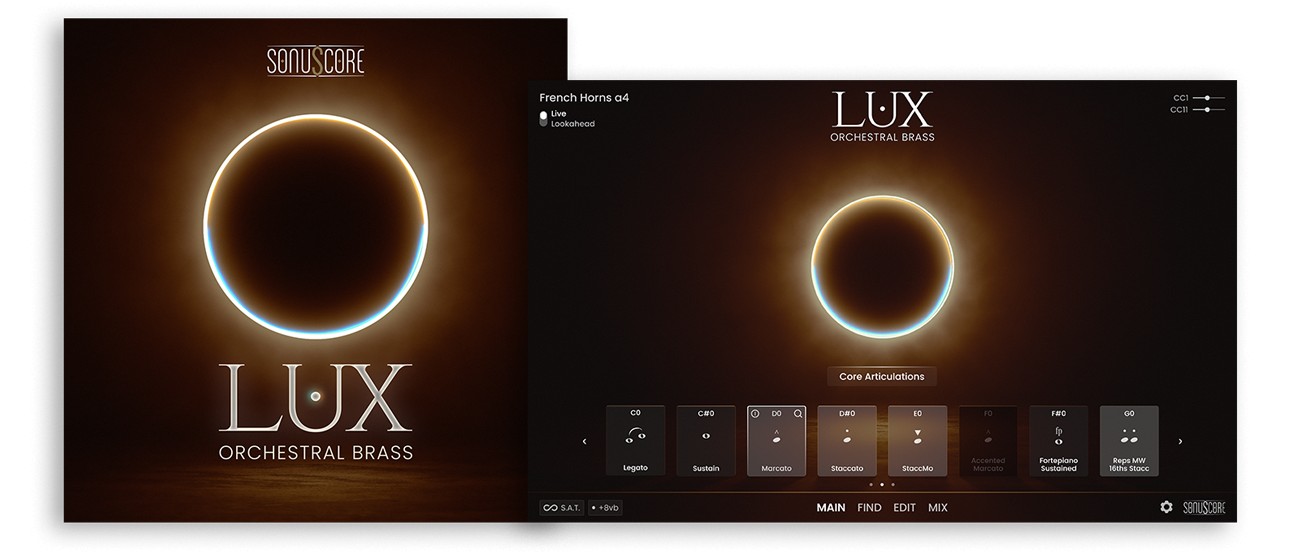
LUX Orchestral Brass brings the sound of a complete symphonic brass section directly into your DAW - recorded on the same large scoring stage as LUX Orchestral Strings and with the same attention to space, dynamics, and musical expression.
The goal is not simply to make brass sound bigger and louder. LUX focuses on what defines real brass instruments: the natural change in tone and character across the entire dynamic range, organic transitions between articulations, and the interaction of a real section within the room.
- Complete orchestral brass section in a classic American layout
- Up to six separately recorded dynamic layers from pp to fff
- Auto Divisi for horns, trumpets, and trombones
- Seamless Articulation Transitioning (S.A.T.)
- Morphing Articulations and Adaptive Patches
- Six microphone positions plus ready-to-use Full Mix
- Composer-Crafted Ensembles with flexible voicings
True Dynamics Instead of Artificial Loudness
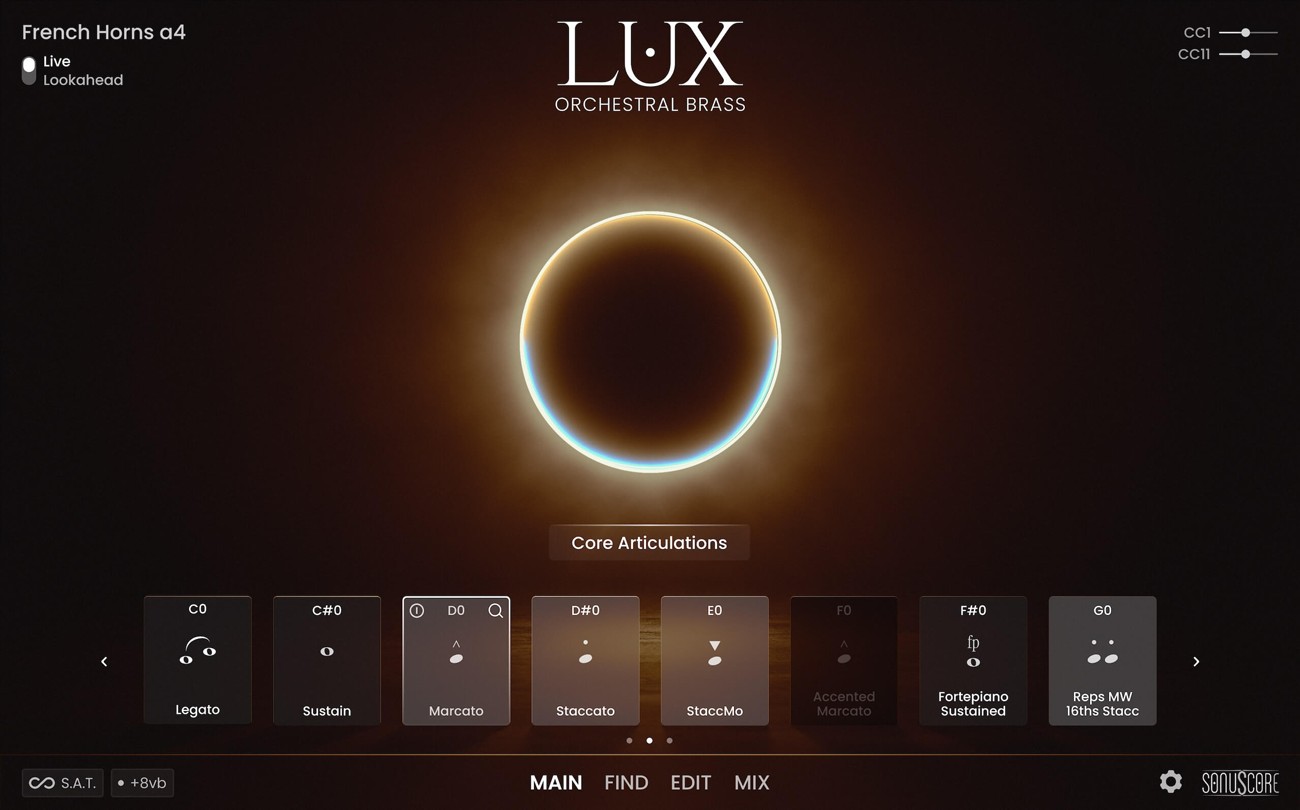
LUX Orchestral Brass deliberately focuses on the articulations composers actually use in everyday scoring. Sustain, Legato, various Marcato styles, Staccato, Staccatissimo, Fortepiano, and Repetitions were recorded in detail and across an exceptionally wide dynamic range.
All long articulations offer up to six separately recorded dynamic layers from pp to fff. Moving the Mod Wheel therefore changes more than just volume - it changes the actual character of the instruments. Softer passages have a warm, gentle resonance, while stronger dynamics progressively introduce more brilliance, power, and characteristic brass bite.
From a warm whisper to uncompromising fortissimo - with natural changes in tone, response, and energy.
American Brass Layout and Auto Divisi
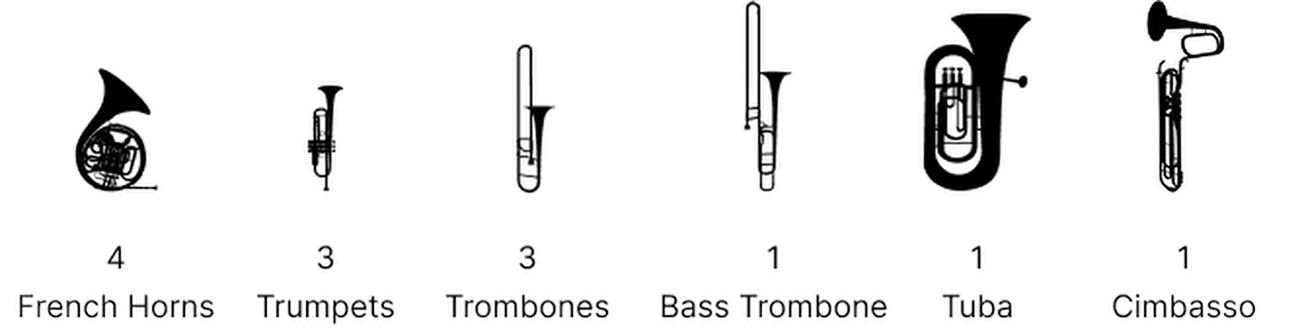
The instrument selection follows a classic scoring-session layout and includes Solo Horn, Horns a2 and a4, Solo Trumpet, Trumpets a3, Solo Tenor Trombone, Tenor Trombones a3, Bass Trombone, Bass and Contrabass Tuba, and Cimbasso. An Ensemble Instrument also makes it possible to play the complete brass section at once.
Dedicated Auto Divisi instruments are available for horns, trumpets, and trombones. The engine automatically distributes played notes across the available musicians while maintaining the original section size. With four horns, for example, a single note is played by all four musicians, while multiple notes are distributed accordingly.
Polyphonic Legato allows naturally flowing chords and independently moving voices. Powerful unison lines and complex polyphonic brass voicings can therefore be played with the same intuitive workflow.
Seamless Articulation Transitioning
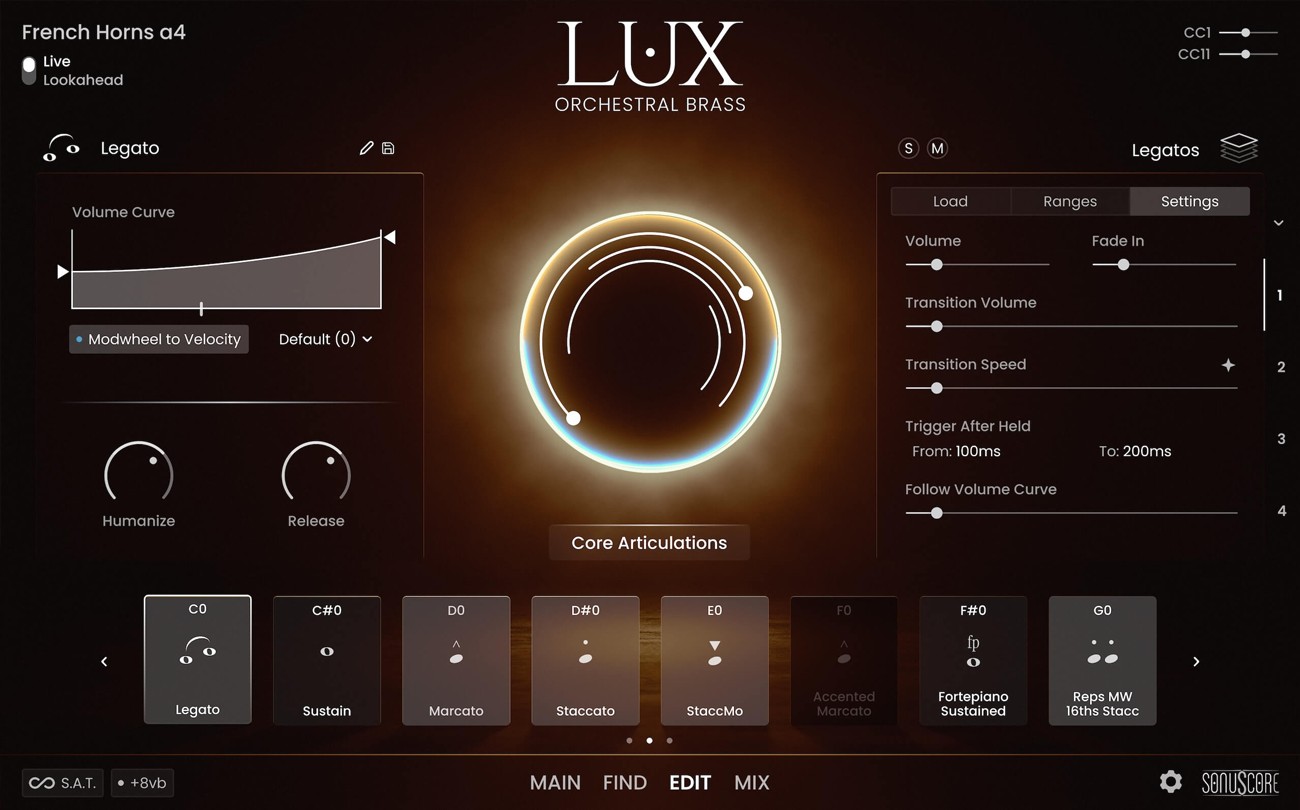
The S.A.T. technology already introduced with LUX Orchestral Strings enables smooth articulation changes within a held note. Legato can transition into Sustain, for example, or Sustain into Espressivo without having to retrigger the note.
The speed of the transition can also be controlled musically. A gentle keyswitch creates a gradual transition, while a stronger input produces a faster change.
Articulations become part of the performance rather than individual samples that are simply switched back and forth.
53 Microphones and One Shared Orchestral Space
LUX Orchestral Brass was recorded on the same large scoring stage as LUX Orchestral Strings. Both libraries share the same acoustic signature and were captured in their natural positions within the same orchestral space.
A total of 53 microphones were used during the brass sessions. 22 microphones captured the brass section itself, while an additional 31 bleed microphones were positioned across the strings, woodwinds, and percussion sections to capture the natural spill of a complete orchestral recording setup.
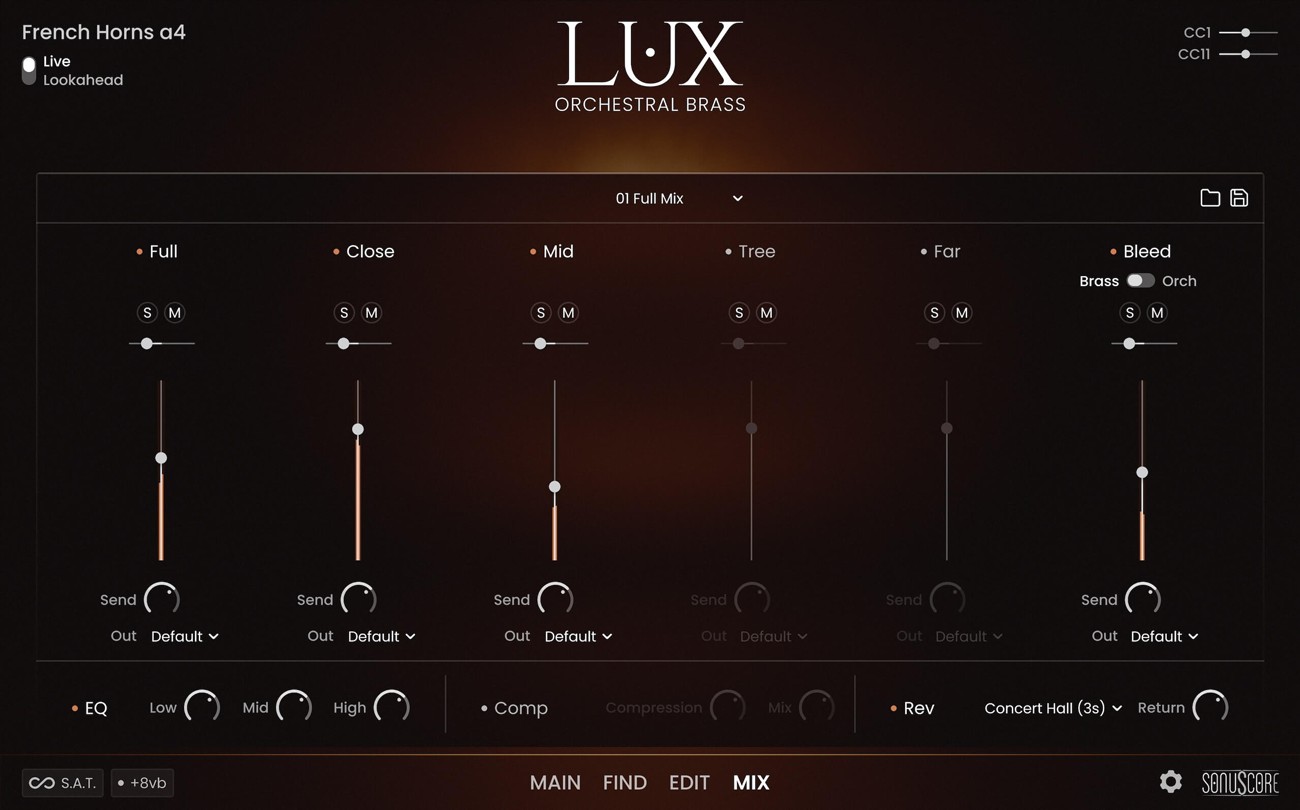
Six microphone positions are available: Close, Mid, Tree, Far, Brass Bleed, and Orchestra Bleed. These are complemented by a ready-to-use Full Mix. The amount of bleed can be adjusted from subtle spatial coloration to the full character of the scoring stage.
Since Brass and Strings were recorded in the same room, both libraries naturally blend into one coherent orchestral image from the very first note.
Composer-Crafted Ensembles
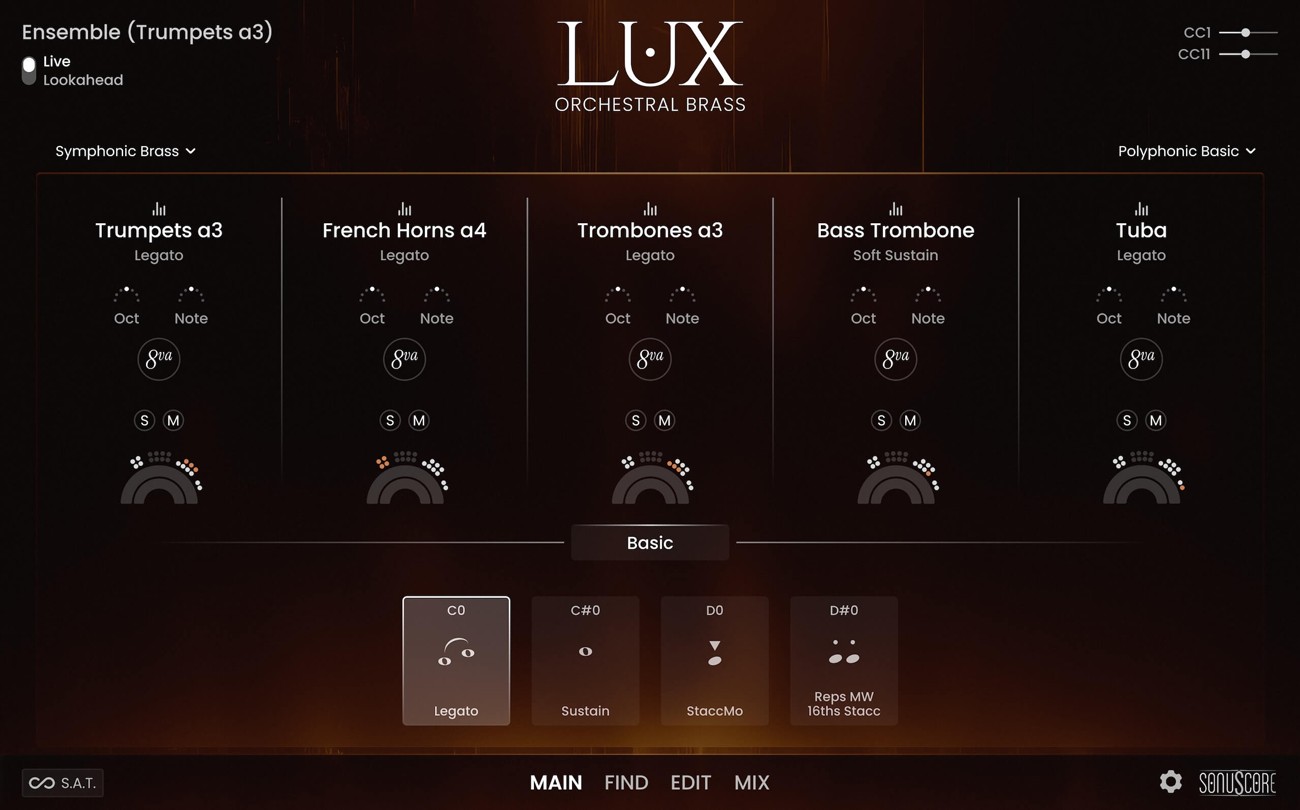
The Ensemble Instrument offers ten different ensemble combinations, ranging from Full Brass to selected combinations such as Horns & Trumpets. These can be paired with twelve different voicings designed for a variety of musical situations.
Intelligent Note Selection automatically distributes incoming MIDI notes across the appropriate instruments, creating ready-orchestrated brass voicings as you play. This makes it easy to perform broad pads, chords, themes, motifs, and powerful fanfares without programming each section individually.
The Ensemble Instrument is equally useful for quickly sketching ideas or as a finished instrument within an arrangement.
Legato, Adaptive Patches, and Flexible Articulations
Naturally recorded True Legato transitions are available for both soloists and sections. In addition, Adaptive Patches respond to playing style and note length and can musically combine articulations such as Legato, Staccatissimo, and Marcato within a single patch.
Morphing Articulations combine different short playing styles such as Staccato, Staccatissimo, Grand Marcato, Accented Marcato, and Fortepiano. Tempo-synced Repetitions can be played directly, with the number of repetitions controlled using the Mod Wheel.
CC11 Expression, Polyphonic Aftertouch, and Dynamic Input Smoothing provide additional control over the intensity and shape of a performance. Extensive keyswitch sets provide access to up to 24 individually configurable articulations.
Recording Technique and Studio Quality
LUX Orchestral Brass was recorded in a classic symphonic seating arrangement. The natural placement of each section provides realistic depth, balance, and a wide, immersive soundstage.
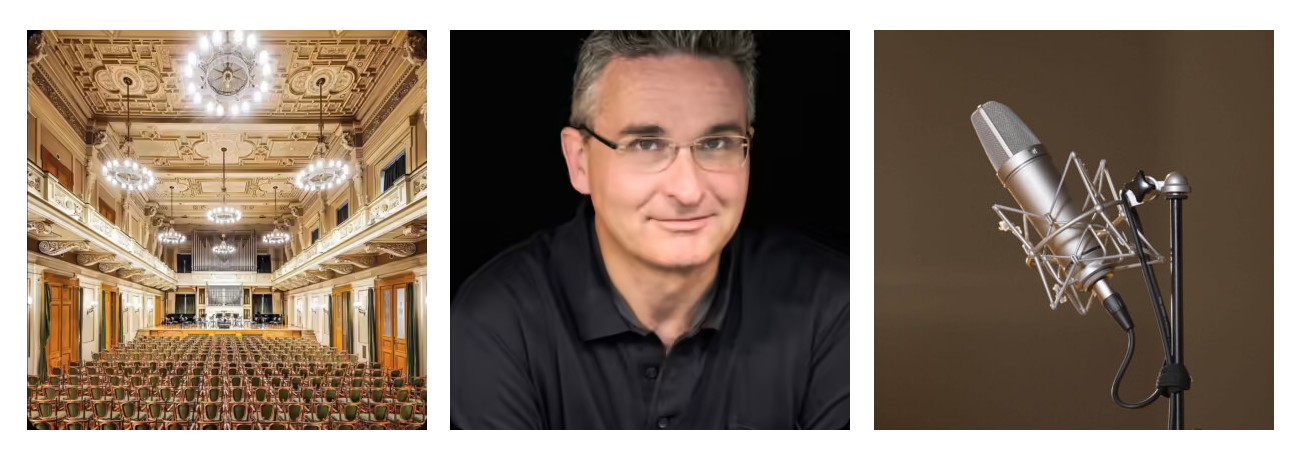
For the sessions, Sonuscore once again worked with StarRecordings and award-winning score mixer Peter Fuchs, who has contributed to more than 400 film, TV, and game productions, including Iron Man 3, Now You See Me, Harry Potter, and Call of Duty.
High-end microphones from manufacturers including DPA, Schoeps, Neumann, and Coles were used throughout the sessions. This preserves details such as breath, resonance, and the natural interaction between the instruments and the room.
Key Features at a Glance
- Complete symphonic brass section in an American layout
- Solo and section instruments for horns, trumpets, and trombones
- Bass Trombone, Bass & Contrabass Tuba, and Cimbasso
- Up to six separately recorded dynamic layers from pp to fff
- Auto Divisi for horns, trumpets, and trombones
- Polyphonic Legato for naturally flowing polyphonic passages
- Expressive True Legato for soloists and sections
- Seamless Articulation Transitioning (S.A.T.)
- Morphing Articulations and Adaptive Patches
- Tempo-synced Repetitions with Mod Wheel control
- 10 ensemble combinations and 12 voicings
- Intelligent Note Selection for automatically orchestrated brass parts
- 53 microphones used during the recording sessions
- 6 microphone positions: Close, Mid, Tree, Far, Brass Bleed, and Orchestra Bleed
- Ready-to-use Full Mix
- Recorded on the same scoring stage as LUX Orchestral Strings
- Equal and Werckmeister III temperament
- CC11 Expression, Polyphonic Aftertouch, and Dynamic Input Smoothing
- 8vb function for additional depth
- Up to 24 freely configurable keyswitches
Built for Scores That Stay with You
From soft, warm horn chords and lyrical solo passages to heroic fanfares and aggressive fortissimo hits, LUX Orchestral Brass covers the full expressive range of a real brass section.
The combination of genuinely recorded dynamics, natural legato, Auto Divisi, S.A.T., extensive microphone options, and the same acoustic space as LUX Orchestral Strings makes the library a flexible tool for film, games, trailers, and modern orchestral productions.
A brass sound that feels performed, not programmed.
Compatible with the free Kontakt Player version 7.10.9 or higher.
Ramin Djawadi
Composer
Game of Thrones | Westworld | Iron Man
“The highly capable LUX Orchestral Brass has a powerful and inviting timbre made accessible through its clever programming.”
Simon Franglen
Composer
Avatar: Fire & Ash | Titanic | The Magnificent Seven
“I’m really impressed. With LUX Orchestral Brass, Sonuscore have succeeded in creating a library that genuinely pushes the envelope for playability and sound. Seriously good.”
Stephen Gallagher
Composer
LOTR - The War Of The Rohirrim | The Beatles: Get Back | District 9
“LUX Orchestral Brass is my dream-come-true workhorse cinematic brass sample library. A virtual golden consort construction from the good people of Sonuscore. It shines in its smoothness and subtlety from softness right through to furnace-fiery fortissimo. The tones are beautiful, and its articulations are deep. The auto divisi function is absolute genius.”
John Enroth
Composer
Thor: Ragnarok | 21 Jump Street
“The Dynamics captured in LUX Orchestral Brass are incredible. Being able to go from that warm hum that is soft brass to biting brass growl with just the mod wheel speeds up the writing process in a way I didn’t know I needed.”
Judson Crane
Composer
Knives Out | Looper | Insurgent
“I love how LUX Orchestral Brass responds to dynamic control; its smooth movement from gorgeous warmth to a bit of brassy bite is realistic and extremely satisfying in a way I don’t experience with other libraries. The auto divisi tools are a big time saver, and playability is top tier. I would 100% use these instruments in a final production.”
Paul Rabiger
Composer
National Geographic | Terra X | Amazon
“Lyrical legatos. Huge dynamic range. A sound that feels played, not programmed. Section divisi automatically picks the right number of players for each chord, keeping the legato polyphonic, and the ensemble divisi distributes chords across the whole brass family. From majestic tutti to the most delicate solo line, LUX Orchestral Brass delivers”

This product requires the free Native Instruments Kontakt Player, the latest version can be downloaded through Native Access, Native Instrument’s download manager!
The minimum required Kontakt version for this product is stated in the product description or can be found on the manufacturers website.
System Requirements:
Mac:
- macOS 11, 12, 13
- 64 bit
- Intel Core i5 or Apple Chip
- RAM: 4GB (6GB recommended)
Windows:
- Windows 10 or 11
- 64 bit
- Intel Core i5 or similar CPU
- RAM: 4GB (6GB recommended)
Supported Interfaces:
- Mac (64-bit only): Stand-alone, VST, VST3, AU, AAX
- Windows (64-bit): Stand-alone, VST, VST3, AAX
Legacy Versions:
If you require legacy installers of Kontakt Player please refer to this Knowledge Base Article.
Enregistrement Requis:
Sonuscore products require you to register with the manufacturer at www.sonuscore.com to activate your license. To use Kontakt Player Libraries you also need to register with www.native-instruments.com.
This product requires an activation!
This product requires Native Access for installation, registration and activation. Start the Native Access-Software and log in using your Native Instruments credetials to start the setup.
To sucesfully activate your product Native Access requires a working internet connection.
An Offline Activation on a different computer is Not Available with this product.
