

Refraction - The Piano as a Living Soundscape
Refraction expands on the spectral shaping approach of Harmonic Bloom and reimagines the piano as a fluid, evolving instrument. Instead of a static sound source, the piano blooms, sustains and transforms far beyond the scope of a traditional piano library.
From expressive piano performances to cinematic pads and hybrid acoustic-electronic textures, Refraction blends authentic piano recordings with spectral resonance processing. A distinctive palette for composers, producers and sound designers seeking motion, depth and character.
The Concept
At its core is a premium upright piano, beautifully recorded through multiple microphone positions and prepared with an ultra-thin felt layer that preserves clarity while softening the attack. The defining moment begins after the key is pressed.
- Resonances of held notes are captured and sustained
- A tuned filter bank follows the played pitches
- The resulting sound is shaped entirely from the piano itself
Microphone Sources
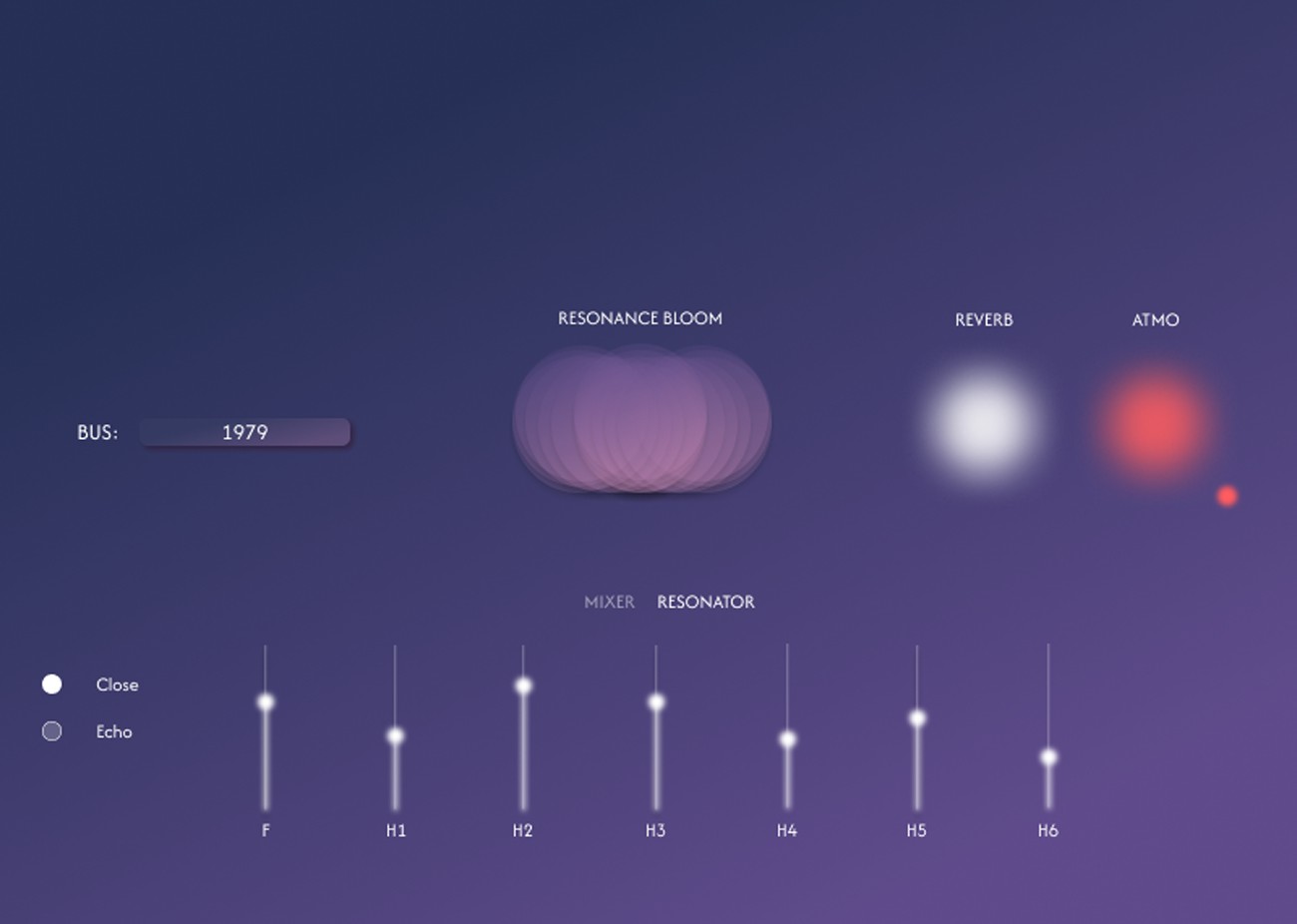
The integrated mixer offers four main microphone positions plus an additional echo signal. All sources can be freely combined while remaining phase-coherent.
- Close Ribbons - Coles ribbon stereo pair for warmth and intimacy
- Close - KM 84 small diaphragm condenser for crisp definition
- Back - Dual Chandler microphones for depth and low-end weight
- Room - AEA R44 ribbon microphone for ambience and vintage colour
- Echo - Vintage Roland Tape Echo with a heavily worn tape loop for characterful, warbling delays
The Resonator
The resonator uses resonant band-pass filters whose centre frequencies are automatically mapped to the fundamental and the first six harmonics of each played note, fully polyphonic.
- Independent control of volume and panning per harmonic
- Processes only the tail of held notes
- Signal source selectable between close-mic submix and echo
Because the resonator operates independently from the main mixer, the piano microphones can be muted entirely. This allows the creation of cinematic pads and evolving textures built purely from the piano’s own harmonics.
Resonance Bloom
The central Resonance Bloom control is mapped to the mod wheel by default and can be freely reassigned.
- Boosts selected harmonics dynamically
- Simultaneously enhances resonance
- Adds organic brightness and spectral richness beyond simple gain control
Ambience
Three refined ambience algorithms expand the spatial character. Any two can be used simultaneously.
- White - Algorithmic room reverb
- Pink - Granular reverb
- Red - Lush, shimmering reverb
Key Features
- Spectral resonator engine for otherworldly textures
- Multi-mic piano capture with phase-coherent mixing
- Dynamic Resonance Bloom control
- Three combinable ambiences
- 30 inspiring presets
- Full NKS integration
- Compatible with Kontakt Player 8.1+
- Library size: 10 GB

This product requires the free Native Instruments Kontakt Player, the latest version can be downloaded through Native Access, Native Instrument’s download manager!
The minimum required Kontakt version for this product is stated in the product description or can be found on the manufacturers website.
System Requirements:
Mac:
- macOS 11, 12, 13
- 64 bit
- Intel Core i5 or Apple Chip
- RAM: 4GB (6GB recommended)
Windows:
- Windows 10 or 11
- 64 bit
- Intel Core i5 or similar CPU
- RAM: 4GB (6GB recommended)
Supported Interfaces:
- Mac (64-bit only): Stand-alone, VST, VST3, AU, AAX
- Windows (64-bit): Stand-alone, VST, VST3, AAX
Legacy Versions:
If you require legacy installers of Kontakt Player please refer to this Knowledge Base Article.
Required Registration:
Sonora Cinematic products require you to register with the manufacturer at www.sonoracinematic.com to activate your license. To use Kontakt Player Libraries you also need to register with www.native-instruments.com.
This product requires an activation!
An internet connection is required to authorize / activate the product.